In 1969, a Canadian educator called Laurence J. Peter published a book arguing, mostly as a joke, that in any organisation people keep getting promoted until they reach a job they can’t do. He called this “The Peter Principle”, but although it was meant as satire, fifty years later three economists went looking for evidence, and found it.
Alan Benson, Danielle Li and Kelly Shue looked at sales records from 214 US firms, including more than 1,500 salespeople who had been promoted to manager. They found that firms mostly promoted their best sellers, and the more someone sold, the more likely they were to get the job. But those top sellers then turned out to be weaker managers. In fact, the people working under them sold less than people working for managers who had been more ordinary sellers themselves.
You can read more about this study yourself, if you like, as it was published in the Quarterly Journal of Economics in 2019. But if you have ever worked in a growing business, you will probably have seen this pattern yourself already…
Have you ever seen the best engineer being made head of engineering? Or the most reliable picker made shift lead? Or how about seeing the nurse everyone trusts, ending up running the ward? And let’s not forget the number of excellent teachers whose only path for progression is to become a head of department, or even a head teacher.
Promotion is how we reward people. And in most organisations, the only step-up from many roles, is management. But what most organisations fail to check, is whether or not the people they are promoting actually make good managers at all.
The Chartered Management Institute calls these people accidental managers, and its research suggests 82% of UK managers fit the description, having had no formal management or leadership training when they started. In fact, the CIPD’s Good Work Index 2025, a survey of more than 5,000 UK workers, found that only 60% of managers felt they had the training and information to manage people well, and just 59% said they had enough time to do it.
This matters in your workplace, because the manager is the person who shapes most of what work feels like for everyone else. Gallup’s research found that managers account for at least 70% of the variance in team engagement, and in a study of more than 7,000 US adults, around one in two had left a job at some point to get away from a manager.
What happens when nobody shows you how
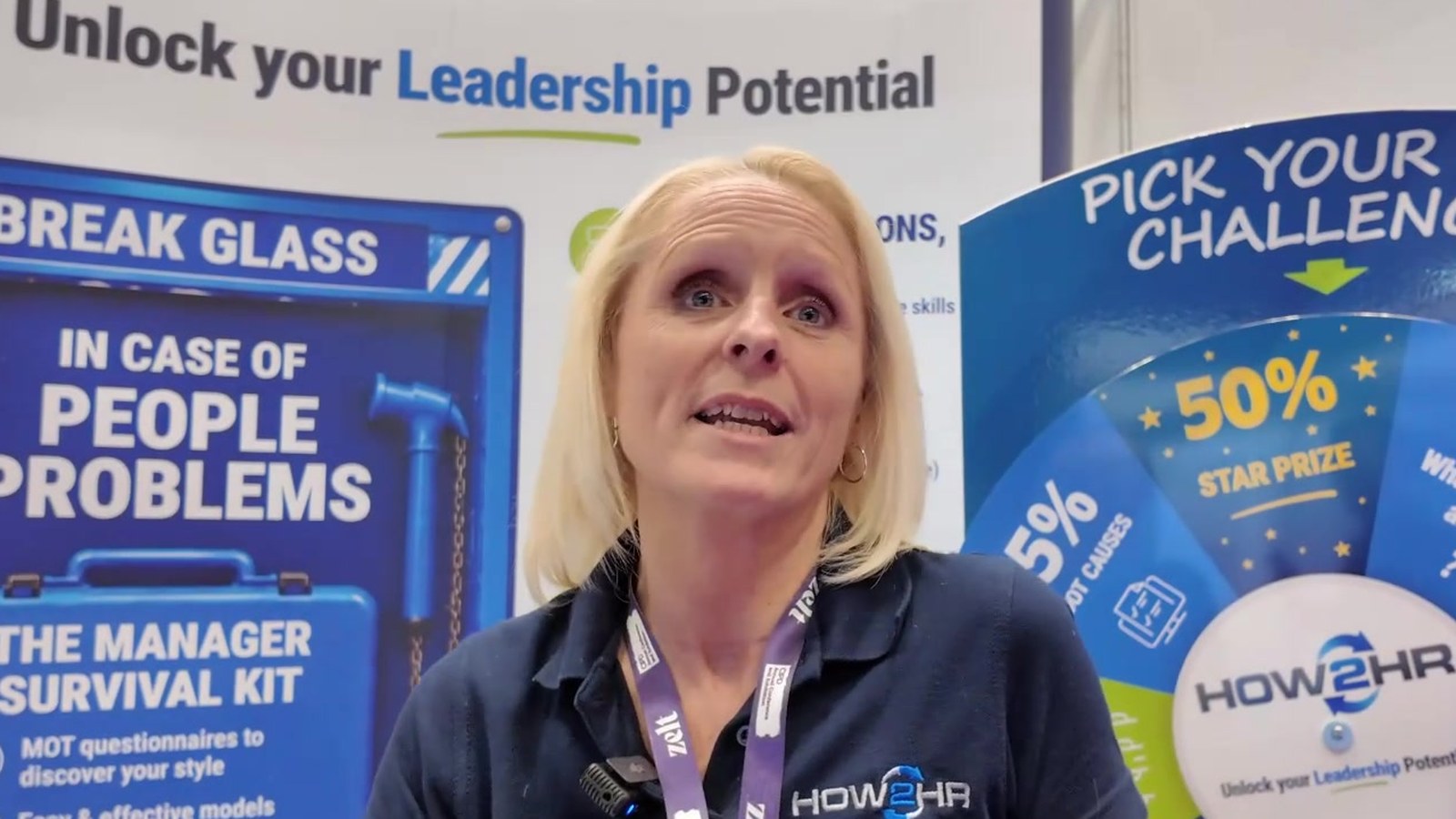
At CIPD ACE 2026, I got speaking about this very topic to Nicki Crowhurst, an HR consultant who runs How2HR management training. She spends her working life with the managers this research describes, and although she recognises that most people promoted to management are severely under-equipped, her view of them is kinder than the Peter Principle.
“I have never met a manager who didn’t want to be good at the job” she told me. “Most of them have simply never been shown what ‘good’ looks like.”
Nicki sees untrained managers drift in one of two directions. The first she calls managing in the comfort zone. These are the people pleasers, who don’t want to fall out with anyone, so they don’t tell people off, and when someone falls behind they would rather take the work on themselves than push the person to catch up. The second is the stress zone, where the manager decides results come from pressure, raised voices and “my way or the highway”.
Kim Scott, who managed teams at Google and taught at Apple University, drew almost the same map in her 2017 book Radical Candor. Her name for the people pleaser is “ruinous empathy”, which effectively means caring about your team but never challenging them. It’s something I personally have found myself guilty of, when managing teams of 5 or 6 people in the past. Kim argues that this is where most management mistakes happen, which fits with what Nicki sees on her courses.
The stress zone, on the other hand, is close to what Scott calls “obnoxious aggression”, where a manager challenges people without showing they care about them. And I’ve met a lot of managers over my lifetime who fall into this category!
The comfort zone is the harder one to spot, because at first nobody complains. The team likes their manager. But because the person who is underperforming never hears that there’s a problem, their colleagues end up picking up the slack. And inevitably, they notice that the rules don’t seem to apply fairly to everyone. In my experience, this usually ends badly, and goes back to something I studied and wrote about extensively some years ago, called “Equity Theory” (Adams, 1965). This can lead to mutinous colleagues who take action to try and “settle the score”. Or, in some cases, it can lead to a pressure build up within the manager themselves, and after months of saying nothing, they may finally lose their patience and leave the employee feeling ambushed.
Now, the stress zone works in a similar way, in that it seems to get results for a while. But once again, the cost follows shortly after, and Amy Edmondson’s work at Harvard Business School on what she called psychological safety helps explain why. In a 1999 study of 51 teams at a US manufacturer, she found that teams where people felt safe to speak up, ask questions and admit mistakes learned more and performed better. Psychological safety was the strongest predictor of that learning of anything she measured. Whereas a manager who shouts gets the opposite, which is people sitting on problems until they are too big to hide.
When an untrained manager gets frustrated and says the wrong thing, the employee can start to feel bullied. And if you watch my interview with Nicki, then you’ll see that this usually has nothing to do with bullying at all. It’s just that the manager doesn’t know how to handle the situation! Don’t get me wrong here, that doesn’t make it harmless, and it can still turn into a grievance. But it can change what needs fixing.
What a balanced manager does differently
Nicki’s word for the perfect management style is “balance”. Scott’s description is “caring personally while challenging directly.” But both of these descriptions point to the same handful of habits, and none of them are complicated. They’re just hard to keep up when you’re still doing half of your old job, which most new managers are!
The first is agreeing what good looks like before there’s a problem. Most of the disputes I’ve seen between managers and their staff go back to two people having different ideas of what was expected. You can solve this by writing down goals early, and checking in at regular one-to-ones, instead of waiting for the annual appraisal. Because by that time, the gap between what the manager expects and what the employee delivers is likely so wide that it’s not fixable.
The second habit, is having the difficult conversations early. For example, instead of noticing that John (no relation) is late every Friday, and sitting on it for three months in the hope it will get better, just have a quick chat about it as soon as it is noticed. It doesn’t have to be an angry chat, or even a formal chat. But it does let the person know what you expect, before the problem has time to escalate.
The third habit is consistency. This goes back to Adams’ Equity Theory, because if one person’s AWOL leads to a disciplinary action, and another person’s doesn’t, the team will notice. And they will not like this unfair treatment. What’s more, if a decision is ever challenged, an inconsistent manager has very little to stand on.
It also helps to get advice before a hard conversation, rather than after it. A lot of the damage Nicki describes in the video above tends to happen in the first minute of a meeting if a manager wasn’t prepared for it.
Where software helps, and where it doesn’t
If you could buy a software subscription that magically made all your managers good, then I’m sure you’d bite my fingers off for it. But the solution actually starts with good training, and there’s no substitute here for someone like Nicki showing your managers what “good” actually looks like.
Software can help, though. And one of the things Sense HR was designed to do, was to help you equip your managers with the tools they need to manage their teams more effectively.
- Our performance management tools give managers and their staff a shared agenda for one-to-ones, with goals agreed in writing.
- Counsel, our AI adviser, uses Acas codes of practice and your own company policies to help your managers make fair decisions grounded in HR best practice.
- Workflows handle things like probation reviews and return-to-work meetings, so the same steps happen for everyone.
- Reporting lets HR see when absence or turnover starts building up under one particular manager. In my experience, that’s often the first sign there’s a problem.
Your HR software won’t turn a reluctant manager into a good one. But it can take away some of the reasons well-meaning managers end up in the comfort zone or the stress zone in the first place.
Fix it before the promotion, not after
The Benson, Li and Shue paper has one more finding worth thinking about. They estimated that if firms promoted people based on how good a manager they were likely to be, rather than on their competence in their current job, then average management quality would be around 30% higher. Few businesses can change how they promote overnight, and I am certainly not suggesting you stop rewarding your best people. But you might find it helps to stop treating the promotion as the end of the process. Or, if you’re going to promote people into positions of management, remember that all managers need good training, a clear idea of what’s expected of them, and somewhere to turn to for advice when things get difficult.
If you’d like to see how Sense HR supports managers with one-to-ones, difficult conversations and consistent processes, book a demo and we’ll walk you through it.
Sources
- Benson, Li and Shue, Promotions and the Peter Principle, Quarterly Journal of Economics 134(4), 2019.
- Chartered Management Institute, accidental managers research, October 2023, via Fortune.
- CIPD, Good Work Index 2025, full report, Figure 23, page 27.
- Gallup, Harter and Adkins, Employees Want a Lot More From Their Managers, 2015.
- Kim Scott, Radical Candor (2017), summarised by First Round Review.
- Amy Edmondson, Psychological Safety and Learning Behavior in Work Teams, Administrative Science Quarterly 44(2), pp. 350–383, 1999.
- J. Stacy Adams, Inequity in Social Exchange, Advances in Experimental Social Psychology, vol. 2, pp. 267–299, 1965.